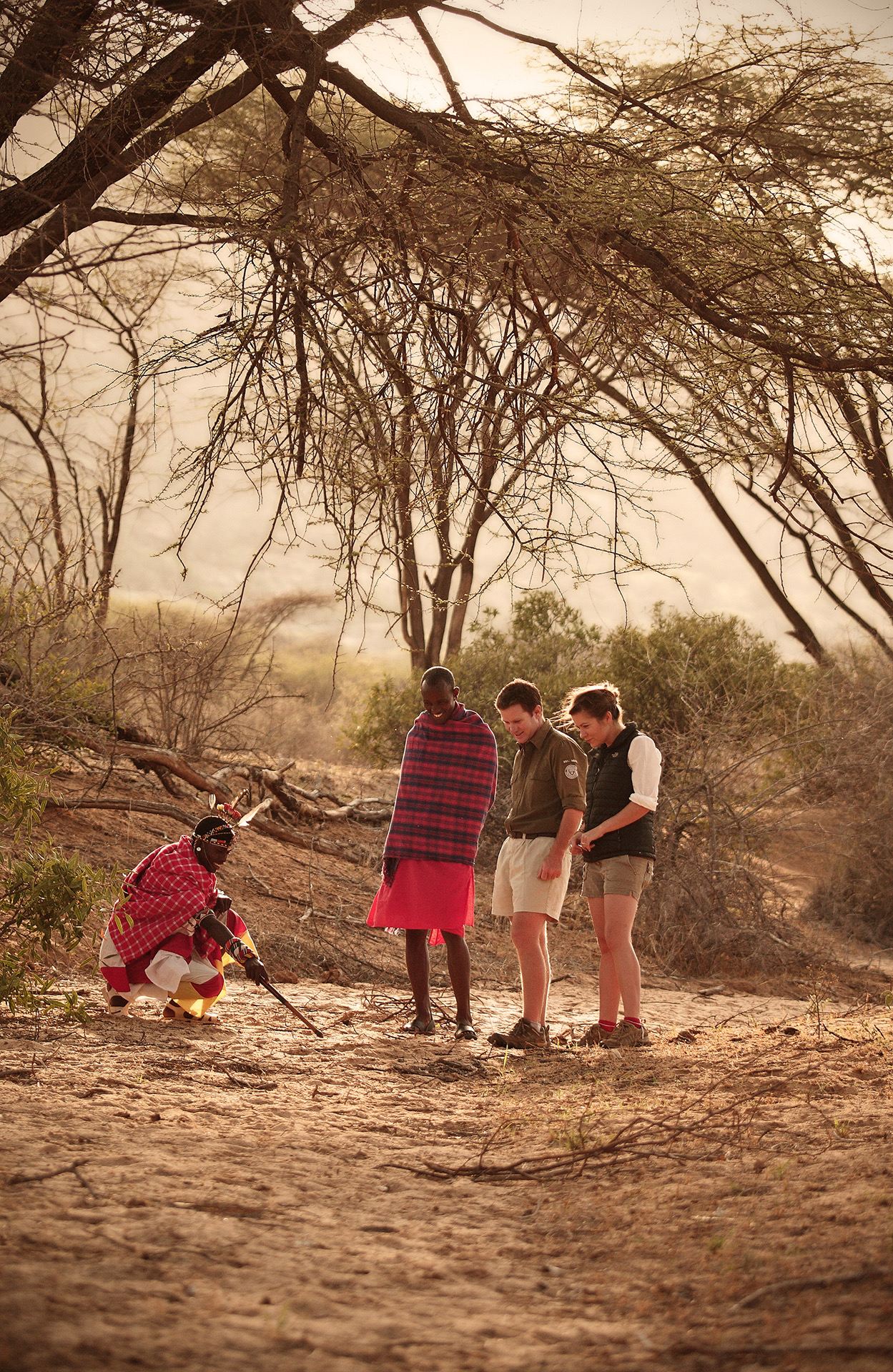
On foot
Where you may walk is decided by the lease, not the camp
Which is why "a walking safari in the Serengeti" is a much thinner proposition than it sounds, and why Laikipia keeps appearing on walking itineraries.
Where it is genuinely permitted
Private conservancies, most community conservancies whose leases allow it, and private concessions. In East Africa that means Laikipia and Samburu in Kenya, the Mara conservancies to a degree, and the southern parks and concessions of Tanzania.
National parks generally do not permit walking except in specific designated areas with a park ranger, which is a real activity but a different one — an hour on a trail rather than a day in a landscape.
The question that settles it
Does the walking start from camp?
If yes, it is available before breakfast, which is when it should happen — cool, active, and the hour when tracks from the night are still readable. If it is a forty-minute drive to a designated area, it is an excursion, and it will happen at nine when the heat has started.
Both are described on a website as "walking safaris available". Only one of them is what people picture.
What serious walking looks like
- A half day, three or four hours from camp, out before light and back for a late breakfast.
- A full day with a packed lunch somewhere shaded, usually on larger private properties.
- Multi-day walks between fly camps, where a crew moves your camp ahead of you and you carry almost nothing.
- Armed guides, always, and usually a guide and a tracker — this is not optional anywhere that walking is real.
- A pace that is nothing like hiking. You will cover very little ground and stop constantly.
What changes on foot
The scale of everything. From a vehicle an elephant is an animal you are watching; on foot it is a decision about wind direction and a route you are already planning.
It is also the one safari activity that is genuinely improved by there being nothing much to see. Tracks, dung, termite architecture, what the bark of a particular tree is used for — a good walking guide can hold a morning together with none of the big animals present at all.
Who it suits, honestly
Anyone reasonably mobile. It is slow rather than strenuous, and the pace is set by looking at things rather than by covering ground.
It suits second and third safaris particularly well. On a first trip most people want to see everything, and walking trades breadth for depth — which is exactly the right trade once the breadth has been had.
What to check before booking
Whether walking starts from camp. Whether it is included or a supplement. Minimum ages, which are common and usually higher than for driving. And whether the camp is on land that permits it or is driving you somewhere that does.
All four have one-sentence answers and all four change what the week contains.
Ready to turn this into a real itinerary?
Send us your dates, who is travelling and roughly what you want to spend per person per night. Our East Africa specialist comes back within 24 hours with a plan built around them and a costed quote.